

Induction stove sales are soaring, but choosing the right model isn’t just about trend or flashy features—it’s about real cost-to-value, long-term running costs, and fit for your home. If you’re a tech-aware, budget-conscious urban home decision-maker seeking safety, savings, and a smart replacement for gas, read on. This guide cuts through noise with actionable ROI comparisons, honest pitfalls, and proven steps to buying the best induction stove for your household.
Key Takeaways
- Induction stoves deliver rapid cooking, top safety, and long-term bill savings—but require compatible cookware and careful model matching.
- Upfront prices vary widely, but actual running costs can beat gas if you optimize usage and electricity rates. portable models offer the fastest payback for most urban homes.
- Brand, power rating, number of cooking zones, and warranty coverage matter more than “smart” extras for most buyers. Compare with real numbers before you switch from gas.
- Why consider an induction stove today?
- Market snapshot 2024–2026 — growth, size, and regional adoption
- Price ranges — India and global marketplaces (and a quick gas-comparison)
- Real-world running costs — low‑electricity induction stove vs gas
- Top user pain points & complaints from Amazon/Flipkart/forums
- Best models & brands by criterion — efficiency, safety, speed, cookware compatibility
- How to choose the right spec for your home (power, zones, size, warranty, safety)
- Top 3 neglected sub-topics competitors miss (opportunity areas to stand out)
- Recent trends & fast‑growing queries (last 90 days)
- Quick “induction vs gas” side‑by‑side (one visual or short bullets)
- FAQs buyers search before purchase
- Conclusion + recommended next step
Why consider an induction stove today?
The induction stove has become one of the smartest home upgrades in recent years. Unlike gas or older electric cooktops, induction stoves use magnetic fields to heat pots directly—delivering ultra-fast boiling, pinpoint heat control, and huge safety advantages since the hob itself barely gets warm.
Urban buyers consistently rate modern induction stoves at 4–4.5 stars on e-commerce, praising their speed, low electricity bills, no open flames, and the ability to simmer or sear with precision. For busy families, safety locks and auto-off mean fewer accidents. The main tradeoffs? Most units need compatible cookware (like stainless steel or cast iron), and the upfront price is often higher than basic gas stoves. Still, running-cost savings and peace of mind win out for many.
Market snapshot 2024–2026 — growth, size, and regional adoption
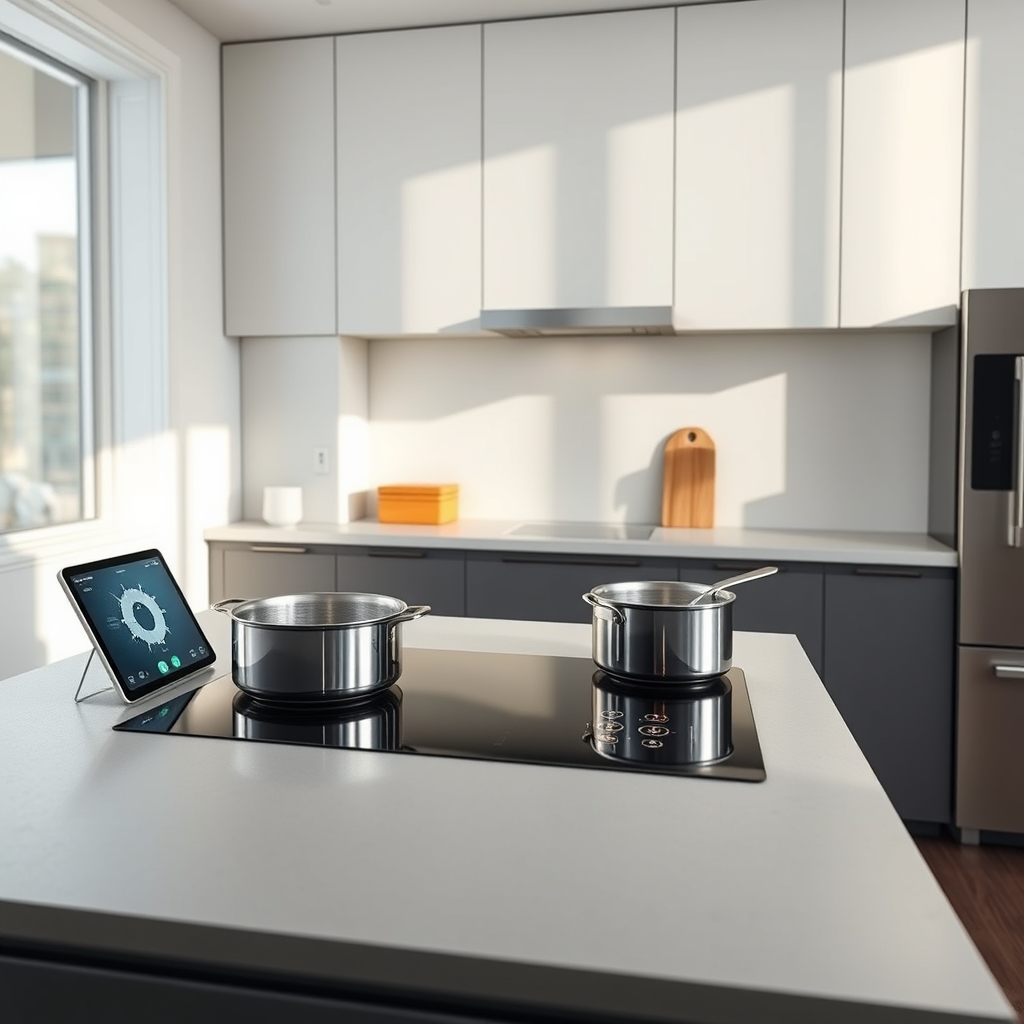
If you think “everyone’s switching to induction,” you’re right. The global induction stove and induction cooktop market is booming—valued at $18.4 billion in 2025 and heading for $38.7 billion by 2034, with Asia-Pacific alone capturing 44.7% of sales (about $8.2 billion in 2025). Built-in models dominate kitchens in Europe and Asia, but in India and much of Asia, portable models are growing the fastest, thanks to urbanization and compact living. Brands from China, South Korea, and Japan are leading innovation, adding features like AI-assisted cooking in premium appliances.
For households, this means more choice, faster innovation, and increasingly competitive prices—especially in markets like India, where government schemes and lifestyle shifts drive adoption. North America is picking up speed, too, as more households ditch gas and demand flexibility for renters and smaller families.
Price ranges — India and global marketplaces (and a quick gas-comparison)
Price is more transparent than ever. In India, entry-level 2-kW induction cooktops for home use start at Rs 1,400–1,800, with mid-tier units at Rs 2,200–2,500 and “premium” models with multi-zone or touch controls at Rs 3,900–5,000. Top brands include Lifelong, Kent, Bosch, Morphy Richards, Wonderchef, Prestige, and LG. Globally, freestanding induction ranges go for $900–$2,200, built-in versions are $400–$4,500, and portable cooktops start at just $35, topping out around $350.
How does this compare to gas? Basic 2-burner gas hobs in India may be cheaper (Rs 1,200–1,800), matching the budget induction price range, while serious mid-range and premium gas models climb to Rs 2,500–6,000. So, for most new buyers, the upfront price gap is shrinking—but the long-term cost difference really depends on daily usage and local energy prices.
For more on optimizing your cookware for induction, see our induction cookware buying guide.
Real-world running costs — low-electricity induction stove vs gas
The real battle is in your monthly bills. A typical 2 kW induction stove (the “mainstream” market spec) used for 2 hours each day will consume 4 units (kWh) per day—about 120 units per month. If your electricity rate is Rs 7 per unit, the stove alone costs about Rs 840 monthly. Gas stoves, meanwhile, use one 14-kg LPG cylinder every 30–35 days for a small family, costing Rs 1,050–1,200 per refill as of 2026.
But here’s the critical twist: induction is nearly twice as energy-efficient as gas (with around 85–90% of heat going into the pot), while gas may waste over half its energy. Real users report lower total cooking bills after switching to induction, especially if you use a “low electricity induction stove,” combine with solar, or follow cost-minimizing habits below.
- Always cover pots for faster boiling.
- Use flat-bottomed, induction-compatible pans.
- Turn off or lower power as soon as water boils or the pan is hot.
- Clean the surface regularly—dirt can reduce efficiency.
For a hands-on guide to using portable burners to save costs in tight kitchens, check out our induction burner tips.
Top user pain points & complaints from Amazon/Flipkart/forums
Overall satisfaction with induction stove models is high—most top-selling units earn 4–4.5 stars on Flipkart and Amazon. But some honest buyer complaints are worth noting so you can dodge them:
- Higher upfront price: Not as cheap as entry-level gas, especially for advanced or imported brands.
- Cookware limits: Only works with ferrous (magnetic) metal. Many traditional or aluminum utensils won’t work. See our cookware guide for what to buy or avoid.
- Buzzing or clicking sounds: Some induction stoves make a slight noise, especially with low-quality or lightweight pans. Not typically disruptive but can be surprising at first.
- Needs stable electric supply: Frequent voltage drops or power cuts can interrupt cooking—rare in urban areas, but check your wiring!
- Surface scratches and fingerprints: Easy to maintain overall, but tough scrubbing can mark the glass, and glossy finishes may show smudges.
Curious about how induction stacks up in real-world spaces? See our air fryer guide for more appliance ROI analysis.
Best models & brands by criterion — efficiency, safety, speed, cookware compatibility
Which is the best induction stove for efficiency, safety, or ROI? The answer depends on your home’s usage, size, and local prices—but consistent winners by buyer goal include:
Value Tier: Cheapest ROI
- Lifelong Inferno 2000-Watt Portable: Rs 1,500–1,800. Extremely low price, good daily performance, ideal for singles or small families.
- Prestige PIC 20.0: Rs 1,650–1,950. Continues to top charts for reliability and simple controls.
Mid-Tier: Best Energy Efficiency & Safety
- Kent Induction Cooktop 2000-Watt: Rs 2,200–2,500. Useful preset modes. Good power management, solid durability.
- Wonderchef Power Induction 2000-Watt: Rs 2,400–2,800. Fast heating with child lock and auto-off. Great balance of efficiency and features.
Premium: Best for Speed & Multi-Cookware
- Bosch Built-In Induction (Serie 4 or 6): Rs 4,500–5,000 and up. Ultra-fast heating, advanced touch panel, comes with auto-shutoff safety and pan detection features. Handles mixed cookware best.
- LG Freestanding Induction: $1,200+. Durable glass, strongest warranty, advanced safety sensors for small children and pets.
Portable units are growing fastest for flexible or small kitchens (≈9–10% CAGR), but built-ins offer the most design integration and space for larger households (≈41% market share, see report).
Need to compare with portable options? Our portable induction burner guide breaks down what’s worth your investment for space- or rent-limited setups.
How to choose the right spec for your home (power, zones, size, warranty, safety)
Picking the right induction stove for home use is less about chasing the highest wattage and more about a fit for your real cooking patterns. Here’s a practical checklist:
- Household size: One or two cooks? Small families are well-served by single- or double-zone models (1–2 burners), while large households may want built-ins.
- Cooking needs: Daily curries or just morning toast/tea? Most home meals are covered by 2 kW units, but heavy fryers or power users may want 2.5 kW or above.
- Electrical supply: Check that your kitchen wiring can handle a 10 amp (or higher) dedicated line.
- Cookware check: Use a magnet—If a magnet sticks firmly, your pan will work. Upgrade only pans you use daily.
- Warranty and support: One-year minimum is standard. Some brands offer up to two years. Choose service centers nearby for fast repairs.
- Safety features: Auto-shutoff, overheat/overflow detection, and child lock are essentials.
For a deep dive into compatible pots and pans, see this cookware for induction guide.
Top 3 neglected sub-topics competitors miss (opportunity areas to stand out)
- Long-term reliability & repairs: While most induction stoves are solid, inexpensive models may develop powerboard or coil failures after 3–6 years. Premium brands have better repair networks. Check parts availability before buying.
- Health implications (EMF, pacemakers): Induction generates electromagnetic fields (EMF) close to the cooking surface. Current research finds no risk for healthy users, but those with certain pacemakers should consult their doctor before choosing an induction stove.
- Recycling/disposal: Unlike gas hobs, induction units have electronic circuits and copper coils. Always recycle via official e-waste channels. Many brands now run old-appliance take-back programs—ask before you buy.
These hidden factors matter for long-term value—and peace of mind.
Recent trends & fast‑growing queries (last 90 days)
Searches for “induction cooktop” and “induction stove” hit an all-time high in December 2025, according to Google Trends. The fastest-rising features buyers want now:
- Smart home integration: Wi-Fi timers, AI-assisted recipes, app-based controls—especially in premium markets like South Korea and Japan.
- Solar readiness and low-power designs: More units now run easily off solar inverters or battery backups, appealing to energy-conscious buyers.
- Government incentives: Urban Indian buyers benefit from local scheme discounts or swaps.
- Compact designs: Demand for slim, single-zone portables is booming among renters and modular kitchen adopters.
Smart and solar-compatible induction stoves are a future-proof choice for many modern homes.
Quick “induction vs gas” side-by-side (one visual or short bullets)
| Feature | Induction Stove | Gas Stove |
|---|---|---|
| Upfront price (India, 2-burner) | Rs 1,400–5,000 | Rs 1,200–6,000 |
| Running cost (small family) | Rs 800–1,000/month (electricity) | Rs 1,050–1,200/month (LPG cylinder) |
| Cooking speed | Very fast, instant heat | Medium—takes longer to boil/simmer |
| Safety | No open flame, auto shutoff | Open flame, risk of leaks |
| Lifetime value | High if built-in; medium for portables (5–10+ years) | High (well-maintained units last years) |
| Top owner complaints | Cookware required, occasional noise, sensitive glass | Hot kitchen, gas smell, fire risk, slower response |
FAQs buyers search before purchase
What cookware works on an induction stove?
Only ferrous (magnetic) cookware—such as cast iron or induction-ready stainless steel. If a magnet sticks to the base, it will work on your induction stove. Aluminum, copper, and glass pans won’t work unless designed with a ferrous bottom. Read our detailed cookware guide.
Can I install an induction stove myself, or do I need an electrician?
Most portable models are plug-and-play. For built-in or freestanding induction cooktops, it’s safer to use a qualified electrician to ensure correct wiring, especially if your home’s power supply is older or underpowered.
Does an induction stove save more money than gas in the long run?
It depends on your cooking time, local electricity rates, and gas prices. In urban India, many users save 10–20% on monthly bills due to induction’s higher efficiency. Lower-priced cylinders or very cheap electricity tip the math either way.
Are induction stoves noisy or dangerous for children?
Induction stoves do make a faint buzzing with some pans, but this is normal and not harmful. Most models include safety lockouts and auto-shutoff—much safer than an open-flame hob for families.
What warranty and repair coverage should I look for?
At minimum, seek a 1-year warranty for parts and labor. Premium brands offer up to 2 years and faster on-site service. Assess repair network quality for your city before buying.
Conclusion + recommended next step
If you want the lowest upfront cost, target a 2-kW portable induction stove for home from Lifelong or Prestige. For the fastest ROI on running costs and safety, a mid-tier Kent or Wonderchef induction cooktop balances energy use and features. Large households or buyers seeking best-in-class performance and longevity should consider a built-in Bosch or LG with safety sensors and multi-zone power.
Before you buy, check your kitchen’s electrical capacity, confirm your pans are induction compatible, and shortlist the three best models for your budget. With the global induction stove market forecast to reach $38.7 billion by 2034 and features expanding every year, there’s never been a better time to upgrade your cooking for safety, speed, and long-term value. Start your switch with the right induction stove for your home today.