

Smart dishwasher models promise lower bills and quieter kitchens, but only select features deliver genuine savings and long-term reliability. If you care about noise, true energy reductions, and WiFi you can count on, your next move isn’t just to buy “the best,” but to check real savings data and avoid costly hidden pitfalls.
Key Takeaways
- Not all “smart” features save you money—focus on proven energy savings, reliable WiFi, and quiet operation, not just AI and flashy apps.
- Nearly 60% of smart dishwashers are built-in and command a 15–20% price premium, but many users report issues with auto-dosing and app reliability.
- Trust independent lab tests and ENERGY STAR data over marketing claims—especially for noise, detergent use, and water savings.
- Market snapshot — is the smart dishwasher wave real?
- Is a smart dishwasher worth the premium?
- Top verified user pain points (and how to avoid them)
- Energy & water savings — what the data does (and doesn’t) say
- Noise, cycle length, detergent & water use — buyer checklist
- Total cost of ownership — upfront + install + extras
- What competitors aren’t answering (opportunity gaps for the article)
- Emerging features & 90-day trends buyers care about
- Conclusion
- FAQ
Market snapshot — is the smart dishwasher wave real?
The smart dishwasher market is not a passing trend—it’s booming. In 2024, global sales reached about $3.7 billion. By 2025, the market will hit $4.1 billion; forecasts estimate $6.8 billion in 2032, a steady 7.6% annual growth (source). About 58–60% of all smart dishwashers shipped in 2024 were built-in models. Roughly 35% of current dishwasher models offer WiFi features. Most of these units are found in modular kitchens built for convenience and premium looks. North America alone accounts for about a third of all smart dishwasher sales.
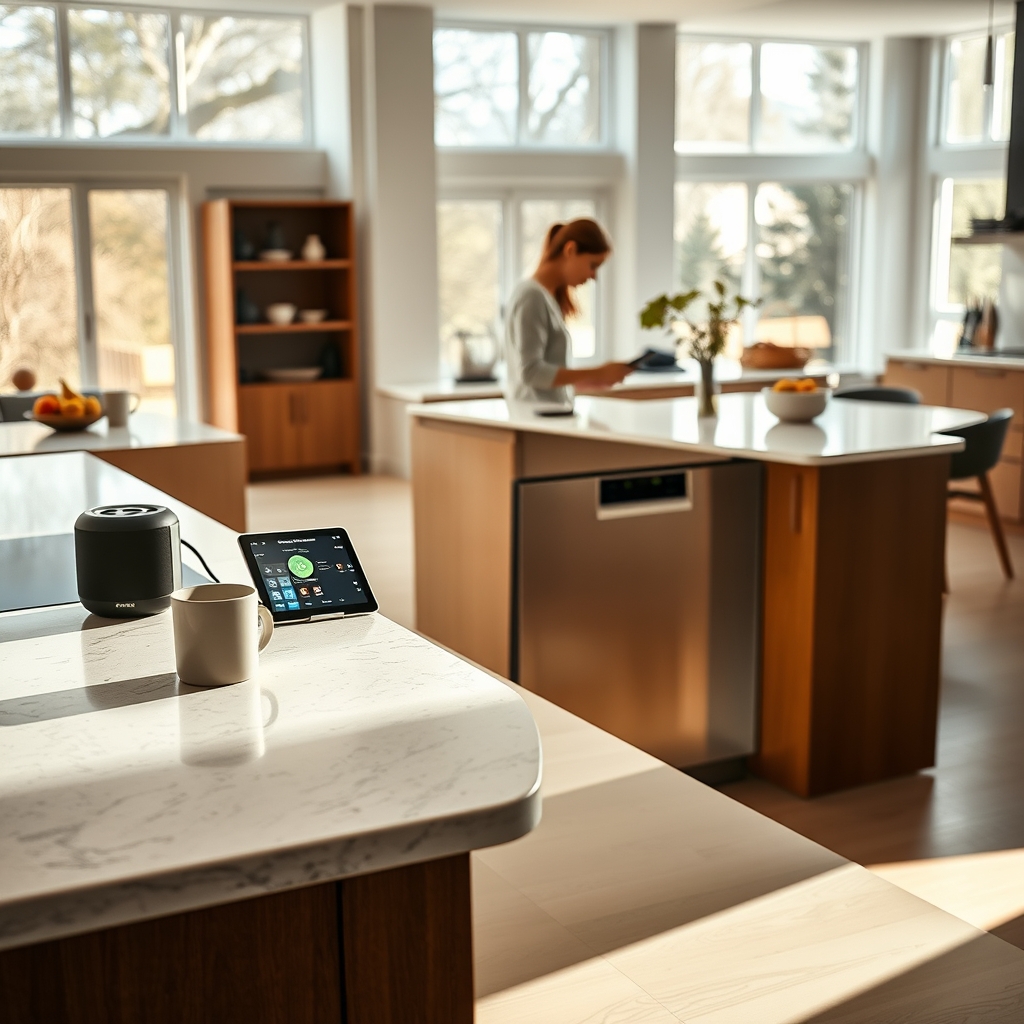
This growth is fueled by more tech-curious homeowners upgrading kitchens, and by the push for water and electricity savings. Brands like LG, Whirlpool, and Bosch continue to invest in WiFi, AI, and remote diagnostics, not just gadgetry.
If you’re also looking at other smart kitchen upgrades, see this 2026 smart kitchen appliances guide for real-world reviews and buyer tips.
Is a smart dishwasher worth the premium?
When you compare a smart model to a regular dishwasher, the price difference is clear. WiFi-enabled models in 2025 average $1,135, while standard dishwashers come in around $1,011 (source). If you want advanced AI features like auto-dosing, expect a 15–20% “smart” premium. This extra money makes sense if you’ll reliably use features that save water, power, or detergent on every run.
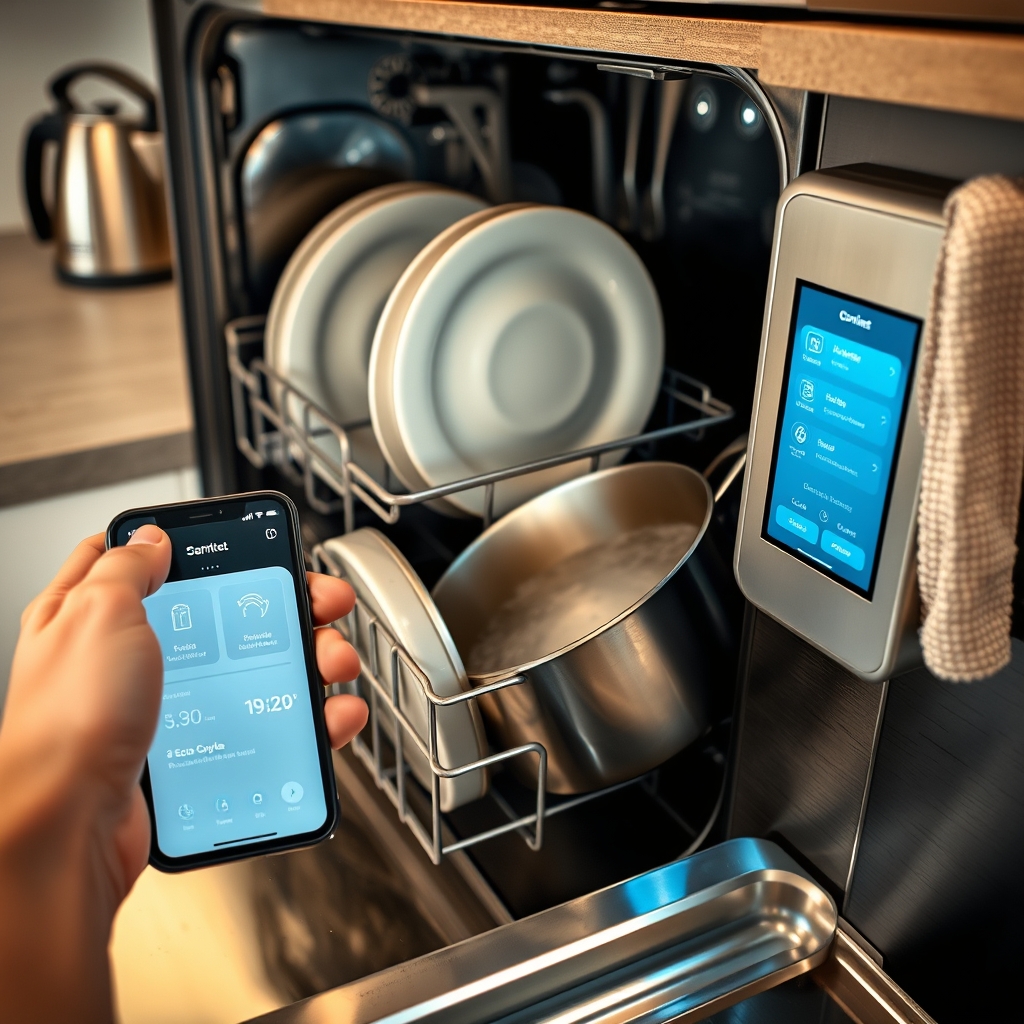
Don’t just chase flashy app controls. Many user reviews reveal that cycle customization and water savings from AI aren’t always dramatic compared to top-end “dumb” dishwashers. If quiet operation is your top need, shop for models where verified review decibel ratings match lab results.
Top verified user pain points (and how to avoid them)
Not every smart dishwasher delivers as promised. Several serious pain points emerge in user reviews and forums. Here are the main issues, why they matter, and what to check before you buy:
| Issue | Typical Cause | How to Avoid |
|---|---|---|
| Poor auto-dosing (detergent waste, residue) | Sensor miscalibration, cheap dispenser components | Check for manual override and user-set dosing settings; always run a few test cycles with your preferred detergent brand before committing |
| Unreliable WiFi/app connection | Weak WiFi chipsets, poor app updates | Read critical reviews about remote start failures; choose brands that regularly update their apps and have strong tech support |
| Hidden cycle options in apps | App-centric design, poor onboard controls | Test device in the store (if possible); confirm all basic cycles are available via the dishwasher’s front panel—important for household members who won’t use the app |
| Elevated noise in AI/adaptive cycles | Motors spin up for adaptive cleaning, quick-dry | Only trust noise claims if back-checked by independent lab measurements; avoid buying based on “quiet” claims alone |
Many buyers also want “one app for all”—but smart home integration is still hit-and-miss. Voice assistant setup (Alexa, Google) is usually straightforward, but troubleshooting failed connections can be complex. If privacy matters, be aware that appliance makers admit up to 50% of customers never connect smart features due to security concerns (source).
For auto-dosing, always compare the best dishwasher with auto detergent dosing reviews—not every system handles pods, gels, and powders equally.
Related: Need ultra-quiet appliances? These induction stove tips also apply to open-plan home layouts.
Energy & water savings — what the data does (and doesn’t) say
You want hard numbers before you buy. Here’s what the data supports:
- Nearly 70% of all dishwasher sales in 2023 were ENERGY STAR models (source), offering guaranteed efficiency vs older units.
- Actual energy per cycle (kWh) and water used per wash (gallons) are rarely published brand-to-brand—most rely on internal lab claims, which can’t always be verified.
To compare true running costs, ask for recent THIRD-PARTY lab test results on both the “normal” and “eco” cycles. Marketers often cite best-case eco stats, but normal cycles may use much more. AI dishwashers aim to shave off both water and electricity using sensors, but the difference is modest—sometimes less than 10% in independent reviewer tests. If no independent test is published, request the manufacturer’s own certified reports.
If you’re hunting for other energy-efficient appliances, check this air fryer buying guide for 2026.
Noise, cycle length, detergent & water use — buyer checklist
Before you buy a quiet smart dishwasher, compare these practical features:
- Noise; Still the top concern for open kitchens. Reviews flag AI/adaptive cycles can be up to 5dB louder than “normal.” Only trust models with third-party decibel testing.
- Eco cycle length; The shortest “eco” mode may still take 2–4 hours. Check if there’s a validated “quick+quiet” option if you run loads outside peak hours.
- Detergent use; Smart dishwashers with auto dosing are often tuned for proprietary detergents—costly to replace. Test for compatibility and check for manual override controls.
- Water per cycle; Only some brands publish verified gallon use. Ask explicitly for third-party lab numbers before assuming savings.
The bottom line: If you want real quiet, low water bills, and reliable AI, require data. Seek recent lab certifications or consumer reports. For smarter shopping, compare this countertop induction burner guide—the checklist mentality works for all kitchen tech.
See also: cookware for induction tips.
Total cost of ownership — upfront + install + extras
That $1,100–$1,300 price is just the start. Here’s what to budget for advanced WiFi/AI dishwasher models:
- 15–20% premium for WiFi, auto-dosing, and app features
- Professional installation, often required for smart models with integrated WiFi, typically $150–$250
- Occasional app/subscription fees (rare, but some brands offer remote diagnostics or extended smart-home integration as paid “premium” features)
- Maintenance—smart sensors and WiFi boards may not last as long as standard buttons; parts can be more costly after warranty
Run the “5-year cost” on a spreadsheet: price, install, detergent, projected repairs. This number almost always makes it clear whether a higher-end best smart dishwasher or a top mid-range WiFi dishwasher delivers a better return.

What competitors aren’t answering (opportunity gaps for the article)
Most “best smart dishwasher” roundups skip these critical questions:
- No hard data on auto-dosing reliability: How often do sensors mis-measure or waste detergent? Insist on lab or reviewer measurements for your AI dishwasher.
- Eco-mode effectiveness: Does “eco” really use less water or power per clean load? Readers deserve full-cycle data—not just marketing claims.
- Privacy & app usability details: How are your WiFi data and device settings protected? Which models force you to use an app to unlock basic settings? Many users in forums express regret when basic controls are app-only.
For smart buying, always layer in troubleshooting tips and honest comparisons. Don’t assume that more “apps” or controls means less daily hassle.
Looking for more tech tips? Read an AI oven buyer’s guide for overlooked details and pitfalls.
Emerging features & 90-day trends buyers care about
Today’s most sought-after features aren’t just more buttons or smarter cycles. Here’s what’s quickly gaining traction:
- Voice assistant integration: Top brands now offer Alexa/Google Assistant controls for hands-free starts and status checks (source).
- Remote diagnostics: In-app troubleshooting and automated repair requests (example: Miele, LG, Whirlpool partnerships with leading tech partners).
- Eco/green certifications: Not just ENERGY STAR, but tests for microplastic filtering and near-zero standby energy use.
- Real-time notifications: More accurate “cycle done” alerts and alerts for rinse aid/detergent refills.
Manufacturers forecast that voice-first controls, remote fix-it options, and deeper smart-home links will define WiFi dishwasher upgrades through 2027.
Explore compact or specialty appliances in the latest icecream maker guide.
Conclusion
If you’re ready to save money and hassle, the smart dishwasher category is rapidly improving—but only certain features are proven to cut water, energy, and noise. Treat WiFi and AI extras as “nice to have” after confirming utility savings, not the other way around. Always review third-party tests and cost of ownership before buying. Your next smart dishwasher can upgrade your kitchen if chosen with care. Ready to compare models and check real-world reviews? Start with what smart oven buyers look for and avoid misleading features in your final shortlist.
FAQ
Do smart dishwashers actually save water and power?
Yes, but savings depend on using eco cycles and AI features consistently. Compared to a 10-year-old model, savings are real, but versus other new ENERGY STAR dishwashers, the gap is much narrower—often less than 10% per cycle.
Is WiFi in a dishwasher worth it?
If you want remote status checks, cycle alerts, or system diagnostics, yes. But beware: app glitches and connectivity issues can force manual controls. Choose brands with strong app ratings and support.
Are auto detergent dosing features reliable?
Auto-dosing works well when calibrated, but many units require sensor resets or manual override. Reviews report extra detergent use and residue unless loaded and maintained properly.
What’s the quietest smart dishwasher option?
Look for models lab-tested under 44 decibels on normal cycles. Be cautious: AI/adaptive/quick cycles are often a few decibels louder than claimed. Confirm with third-party lab reports, not just marketing material.
Do smart dishwashers have privacy risks?
Any connected appliance can collect usage data, and WiFi/app features may require account creation. Check what data your dishwasher shares, and how easy it is to run all functions locally, without the app.
—