

Smart multicooker innovations are everywhere – but real time and effort savings aren’t guaranteed. WiFi multicookers promise automated, hands-off meals, but the trade-offs are real: added complexity, countertop footprint, storage headaches, and “smart” annoyances can offset their high-tech perks.
Key Takeaways
- The smart multicooker market is booming, with WiFi/app-connected models now accounting for over 50% of new sales – but real-world reliability and simplicity vary greatly.
- Most buyers expect time savings, remote recipe control, and hands-off convenience, yet many report frustrations around learning curve, connectivity glitches, and air-fry performance.
- To get genuine value, buyers need to weigh connectivity features against practical trade-offs like countertop footprint, app stability, and storage demands.
- Market snapshot — growth, WiFi adoption, who’s buying
- Why buyers upgrade — expected benefits & real user outcomes
- Top 5 verified user frustrations (what to warn readers about)
- Head-to-head: Tefal Home Chef Smart vs. Instant Pot Pro Plus, Ninja Foodi, Proscenic T31
- Price & value: how much to expect and how to justify premium
- Technical differences & safety — what matters under the hood
- SEO & commercial intent — top consumer queries to target in product pages
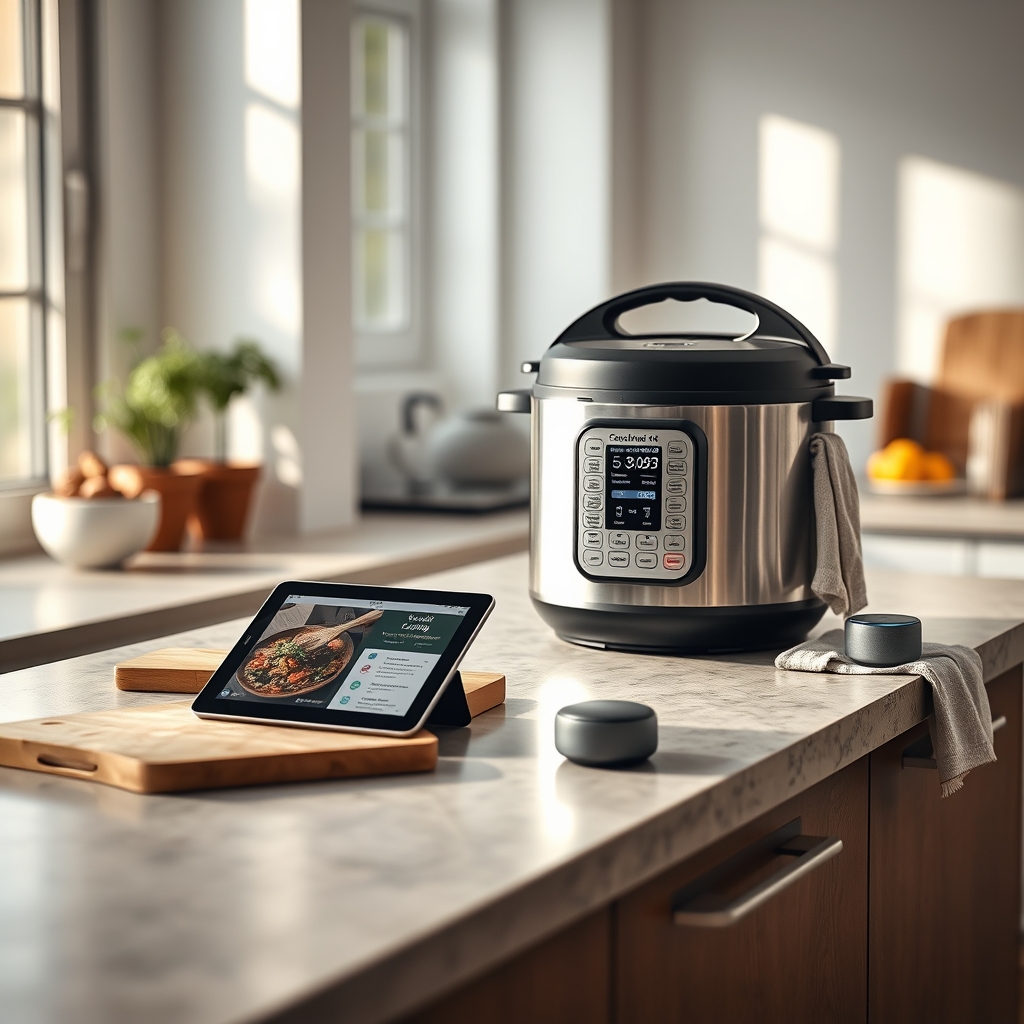
Market snapshot — growth, WiFi adoption, who’s buying
The global smart multicooker market hit approximately $4.5 billion in 2024, with an annual growth rate of 7.5% since 2022 [source]. The fastest growth comes from WiFi “one-pot” smart multicooker models, now responsible for about 52% of sales—or $1.7 billion—growing at an even quicker 8.9% CAGR [source].
WiFi adoption rates have risen rapidly: 18% in 2020, 30% in 2022, and ~40% by 2024. This isn’t just hype. Busy home cooks ages 25–54 are driving this surge: they want fewer devices, digital controls, remote monitoring, and flexible recipe options.
Digital-first brands and premium appliances set the pace. Advanced models now default to WiFi/app controls, with nearly 90% of premium ($300+) multicookers shipping with built-in connectivity as of 2024-2025 [source].
Why buyers upgrade — expected benefits & real user outcomes
Most smart multicooker owners are not tech hobbyists; they’re looking for real, hands-off cooking. The best smart multicooker promises “dump and go” meals, smart recipe automation, and the ability to monitor or adjust settings remotely—sometimes from another room, sometimes from an office desk.
Remote-start, step-by-step recipe walkthroughs, and notifications when cooking’s done are key reasons buyers pay the premium. Research shows that in 2025-2026, at least 42% of multicooker buyers specifically selected a model based on its digital connectivity—including WiFi and advanced app integration (see this detailed market research).
However, qualitative user reports and hands-on reviews show the benefits depend on how “smart” the device truly is—and how intuitive the app and controls turn out to be. Some users report significant weekday time savings; others struggle with feature overload or fiddly setup.
Top 5 verified user frustrations (what to warn readers about)
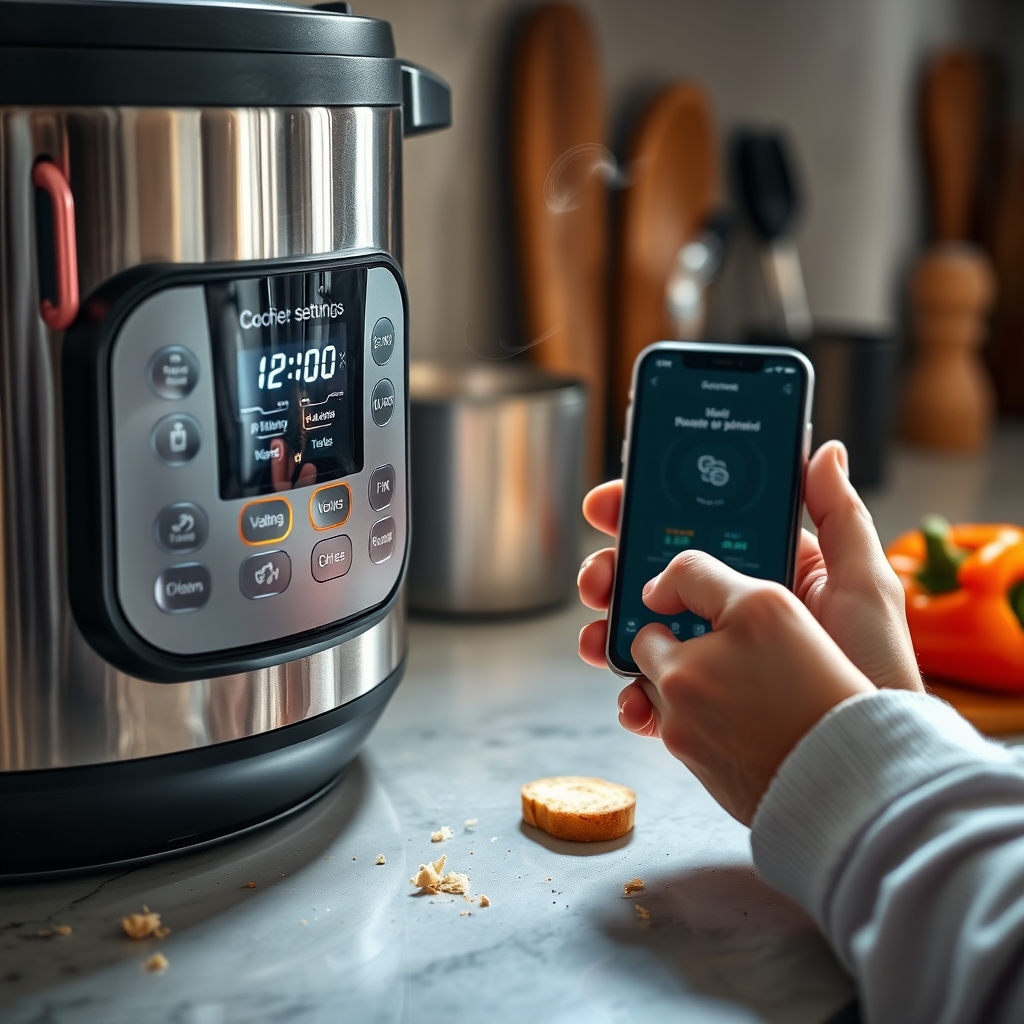
The upside of a smart multicooker is clear—but common pitfalls are heavily documented in real reviews and forums. Key frustrations to watch for (especially with pressure cooker air fryer combo models) include:
- Bulky lids/accessories and storage issues: Interchangeable lids, baskets, racks, and accessories eat up counter and cabinet space.
- Uneven/underwhelming air-fry performance: Many combos (esp. large capacity) produce less-than-crispy results, particularly on the bottom.
- Unreliable connectivity or app crashes: WiFi/Bluetooth can drop. App updates sometimes break recipes or voice assistant integration.
- Steep learning curve/confusing menus: Feature overload and minimal quick-start guides mean many users never fully utilize their device.
- Inability to stir mid-cycle/design quirks: Safety interlocks prevent opening during pressure—agitating foods safely mid-cook remains unsolved on most units.
In short, even top-rated models have their quirks, so it’s crucial to match your expectations to the product’s reality.
For a deep-dive into air fry results, see our air fryer buying guide 2026 for real owner reviews and proven tricks.
| Model | Capacity | Functions | WiFi/App | Sensor Control | Accessories | Footprint/Weight | Air-Fry Performance | Warranty | Approx. Price* |
|---|---|---|---|---|---|---|---|---|---|
| Tefal Home Chef Smart Multicooker | 6L / 8 qt | Pressure, Sous-vide, Steam, Slow, Air-Fry | Yes (Tefal App), Alexa/Google Assist | Precision sensors, PID | Dual lids, fry basket, racks | ~14×14” / ~10 kg | Good, minor airflow issues | 2 yr | $330-400 |
| Instant Pot Pro Plus | 6 qt / 8 qt | Pressure, Sous-vide, Saute, Slow, Steam, Rice | Yes (Instant Brands App), Alexa Connect | Advanced pressure/temp sensors, PID | Optional air-fry lid, racks | ~13×13” / ~9.5 kg | Very good w/air-fry lid | 1 yr | $189-230 (+$80 for air-fry lid) |
| Ninja Foodi Smart XL | 8 qt / 10 qt | Pressure, Slow, Air-Fry, Dehydrate, Bake | Limited (Bluetooth/App for select) | Standard sensors | Dual lids, fryer basket, racks | ~16×15” / ~12 kg | Strong top-crisp, uneven bottom | 1 yr | $290-350 |
| Proscenic T31 One-Pot | 6 qt | Air-Fry, Roast, Bake, Broil, Grill | Yes (Proscenic Home App), basic Alexa | Basic temp sensors | Basket, rotisserie kit | ~15×14” / ~8.5 kg | Best for small batches | 1 yr | $170-220 |
*Prices are average for 2026 and may vary by retailer/location.
Ready to choose? Don’t forget the practical issues: how much space the “one pot smart cooker” takes, the number of parts to store, and whether the app gets consistent updates. Older devices can quickly lose their “smart” advantage as OS and app support shifts.
For more appliance comparisons—including best induction cookware for smart kitchen setups—see our cookware for induction buying guide.

Head-to-head: Tefal Home Chef Smart vs. Instant Pot Pro Plus, Ninja Foodi, Proscenic T31
Let’s break down how leading models stack up for real-world WiFi and app performance, design, and reliability.
- Instant Pot Pro Plus: Market leader with the best smart pressure cooker controls, top-tier WiFi/app experience, reliable Alexa support, and industry-leading sensor arrays for precise heat and pressure. Optional air fryer lid is a nice upsell but sold separately. Great for tech-comfortable users who want flexibility and recipe automation. (market report)
- Tefal Home Chef Smart Multicooker: Strong for all-in-one, daily use; app is easy but hotfixes are less frequent. Delivers consistent pressure and sous-vide cooking, but some users report uneven air-frying.
- Ninja Foodi Smart XL: Air fry/pressure cooker air fryer combo with powerful air fry results up top and an easy interface. Heaviest/most bulky; Bluetooth/app functions feel tacked-on and sometimes buggy.
- Proscenic T31: Solid budget play for those who don’t need robust pressure-cooking. Reliable for single meals (rotisserie, grill, basic air fry), but limited for “one-pot” automation or large batch cooks.
Footprint, lid storage, and app compatibility are more annoying in day-to-day use than specs suggest—try to physically check the multicooker at a store if you can.
If you want a full connected kitchen, check out our smart kitchen appliances buying guide for control integration tips.
Price & value: how much to expect and how to justify premium
WiFi multicookers and all-in-one smart pressure cookers come at a premium—expect roughly 30% higher prices than comparable “non-smart” models [market data]. Typical 6 to 8-quart models cost between $190 and $400 and can easily exceed $500 for pro models with advanced sensors, branded apps, and robust voice assistant support.
- Entry-level WiFi multicooker: $170–220
- Best-in-class, “one pot smart cooker” with full connectivity: $300–410
- Premium/large capacity, advanced sensors: $400–550
Is it worth it? For buyers who genuinely use remote-start or guided-recipe features several times a week, the reduction in total appliances (no more separate air fryer, pressure cooker, slow cooker) provides ROI in both money and space.
But—if you mostly use manual modes, rarely cook in advance, or already own several counter appliances, a dedicated device or two may actually be simpler (and far less expensive in the long run).
For small kitchens, also see our induction burner guide for countertop-saving tips.
Technical differences & safety — what matters under the hood
Today’s top smart multicookers and pressure cooker air fryer combos are built around advanced sensor suites—but each platform is different.
- Smart multicookers: All-in-one, PID temperature control, lid and accessory switching, native app and voice assistant features, safety mechanisms (thermal/pressure limits).
- Smart pressure cookers (Instant Pot, Breville): Focus on precise sealing, valve safety, and temperature management—less robust air-fry; best for stews, beans, braises.
- One pot smart cookers (e.g., Tefal, Ninja): Blend air-fry and pressure cooking, but often trade off air-circulation performance or require more frequent cleaning due to ventilation quirks.
Manufacturers like Instant Brands have led on sensor and app integration, with robust mobile apps and ecosystem support [industry source]. Still, even WiFi multicookers can lag on app updates or fail to connect as smart home platforms evolve.
Key safety features to demand (regardless of model):
- Reliable pressure and thermal cutoff systems
- Lid detection and automatic locking
- Automatic release/venting modes
- Error/alert notifications on both device and app
- Regular firmware/app security updates (to manage privacy/cyber risks)
If you want air fry performance first, see dedicated models in our air fryer reviews 2026.
Smart Multicooker Buying Checklist: Avoid These Traps
- Check the footprint (main unit plus lids) fits your regular storage or countertop spot before you purchase.
- Read app store reviews and confirm ongoing compatibility with your phone/tablet OS.
- If you need to interrupt or stir frequently, know that most pressure/air fry combos do not allow mid-cycle opening.
- Prioritize units with a clear manual mode, not just app-only control—especially if you want the best smart multicooker flexibility for power outages or older relatives.
- Verify hotline and warranty support: early failures are not rare, and poor support can be a dealbreaker.
For alternative appliance options (like smart ovens or induction stoves), visit our guides on smart countertop ovens and induction stoves.
SEO & commercial intent — top consumer queries to target in product pages
To help you find (or list) the right smart multicooker, it helps to use and target these real buyer queries for product pages and reviews:
- Buying guides: “best smart multicooker 2026,” “WiFi multicooker with recipe app,” “pressure cooker air fryer combo reviews”
- Connectivity & app reliability: “Which WiFi multicooker apps are most reliable?” “Does [brand] work with Alexa/Google?”
- Air fry & pressure function comparisons: “Instant Pot vs Ninja Foodi air fry,” “one pot smart cooker air-fry versus convection oven”
Search demand backs this up: the WiFi segment now sees 42% of buyers selecting smart models for digital control and remote use, and this continues to outpace standard multicooker queries.
If you want to simplify your kitchen, try our in-depth smart kitchen appliances guide, or explore smart dishwasher and fridge upgrades in Smart Dishwasher 5 Best Proven Buying Tips and Smart Refrigerator: 5 Best Proven Ways To Reduce Waste.
For air fryer alternatives, our air fryer reviews 2026 cover everything from value picks to premium models—worth a look if you want fewer functions but top crisp results.
Conclusion
Smart multicookers can genuinely cut down on prep and monitoring—if you pick the right model, with reliable WiFi/app support and a design that fits your home and routines. For anyone ready to upgrade, weigh the benefits of the smart multicooker against the added complexity, cost, and storage needs. Always prioritize real user experiences, robust app support, and warranty coverage before you commit.
Looking for specific tips, reviews, or size advice for your kitchen? Use the buying links and guides above, or leave your questions in the comments. Found this helpful? Share with a friend, and don’t buy on specs alone—buy for how you’ll actually cook.
FAQ
What is the best capacity size for a smart pressure cooker?
6 to 8 quarts (or liters) is best for most families (3-5 people); single cooks or couples can go smaller (3-5 quarts), but larger models often have better features and accessories.
How reliable are WiFi multicookers for remote use?
Top brands like Instant Pot and Tefal have improved reliability, but app and connectivity issues (crashes, dropped pairing) are still a common complaint. Always check device compatibility before buying.
Do air fryer combos work as well as standalone air fryers?
Most pressure cooker air fryer combos offer good but not great crisping—especially for large, dense loads. For the best results, see our air fryer reviews 2026 for alternatives.
How do I make sure my smart multicooker lasts?
Register for warranty, avoid overfilling, clean seals/valves regularly, and keep apps/firmware updated. Be careful with firmware; some auto-updates can disrupt function if not maintained by the brand.
Are smart multicookers safe from cyber threats?
Major manufacturers are strengthening encryption and security, but WiFi kitchen appliances always carry some privacy risk. Only connect via secure WiFi and keep your firmware up to date for best protection.